
Chapter 1
IN THIS LESSON
Yoga evolves. Our understanding evolves. And teaching needs to evolve with it. In this module, I want to look at posture, not to criticise yoga, but to care for it. Because some of the things we commonly hear in yoga classes are well intentioned, but no longer accurate, and in some cases, potentially harmful.
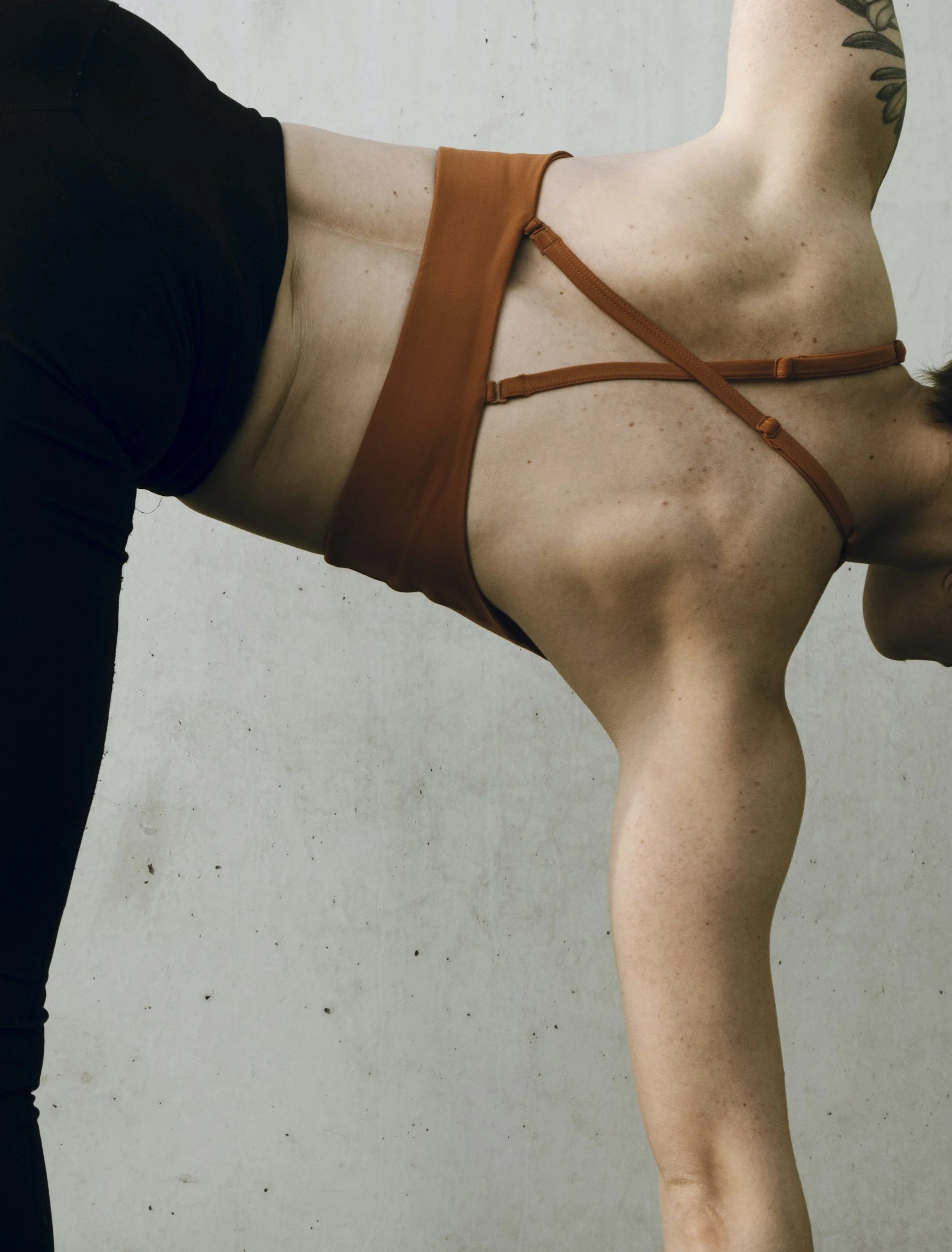
By this point, you may already be sensing a theme. Yoga evolves. Our understanding evolves. And teaching needs to evolve with it. In this module, I want to look at posture, not to criticise yoga, but to care for it. Because some of the things we commonly hear in yoga classes are well intentioned, but no longer accurate, and in some cases, potentially harmful.
Why cues matter
Words matter. The cues we give shape how people move, how they load their joints, and how they relate to their bodies. Many cues have been passed down without being questioned. Not because teachers don’t care, but because they were taught that way themselves. The issue isn’t bad teaching. It’s outdated models.
The shoulder example
Let’s start with the shoulders. Have you ever been told to “drop your shoulders away from your ears” in poses like Warrior One or a high lunge? That cue makes sense in certain contexts. When we’re seated, stressed, or habitually tense, lowering the shoulders can reduce unnecessary holding. Many people carry a lot of tension there. But now let’s look at what happens when the arms move overhead. When the arms lift, the shoulder blades need to rotate upward. That movement creates space in the joint. If we cue someone to force the shoulders down while the arms are overhead, we can actually compress the tissues of the shoulder. Over time, this can contribute to irritation, pain, or a feeling that something just isn’t right. This is one of the reasons some students begin to experience shoulder discomfort after regular practice.
The body is doing exactly what it’s being told.
Context matters
This doesn’t mean the cue is always wrong. It means it’s context dependent. Good teaching isn’t about memorising cues. It’s about understanding why and when something is appropriate.
The hip and pelvis example
Another common cue is to “square the hips.” You’ll hear this in Warrior One, Warrior Two, and even in balancing poses. But here’s the thing. The hips don’t actually square in the way we imagine. If we try to force them to, something else has to compensate. Often, that compensation shows up at the knee or the lower back. When people strain to square the pelvis, the knee can twist under load, or the lumbar spine can lose its natural organisation. Again, the intention is stability. The outcome can be stress.
What this points to
These examples highlight a bigger issue. Yoga isn’t failing. The language just hasn’t kept up with our understanding of human movement. We now know the body works as an integrated system. Joints don’t move in isolation. Stability and mobility are shared across tissues. Teaching needs to reflect that.
What we focus on instead
Rather than forcing shapes, we look at function.
What is this joint designed to do?
What is this position asking of the body?
Where should effort be, and where should ease be?
When we teach from this place, students move with more intelligence, less strain, and more confidence. And practice becomes something that supports the body long term, not something it needs to recover from.
Gentle reflection
Here’s something to notice in your own practice.
Are there cues you follow automatically, without checking how they actually feel in your body?
There’s no judgement here.
Just awareness.