
Chapter 1
IN THIS LESSON
“Many misunderstandings around yoga come from the idea that it is fixed, ancient, and unchanging.”
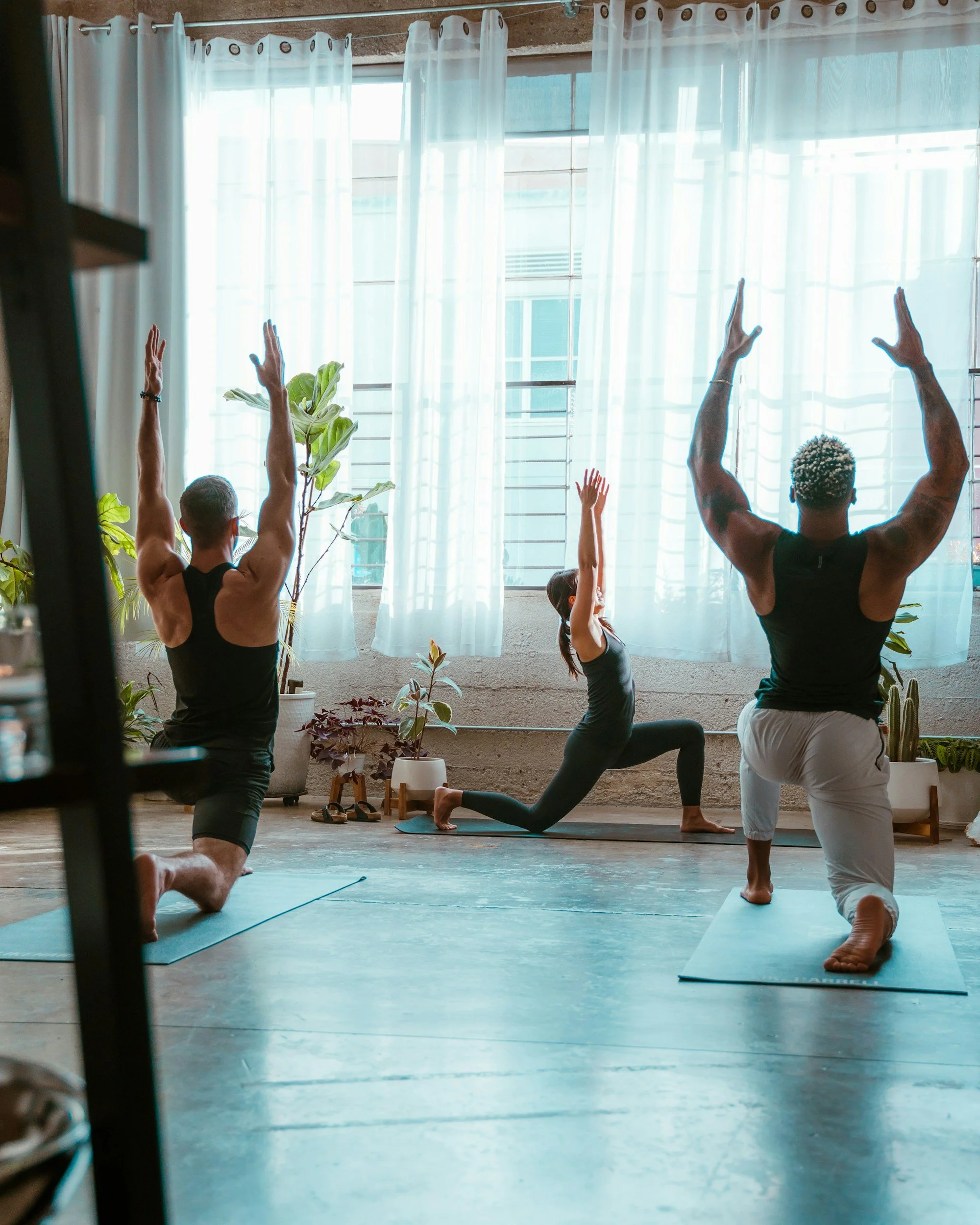
Before we talk any further about modern yoga, science, or training, it’s important that we pause and look back. Because many of the misunderstandings around yoga come from the idea that it is fixed, ancient, and unchanging. That simply isn’t true.
Yoga has always been a living tradition that has evolved to meet the people of the day.
What yoga originally meant
At its root, the word yoga comes from a term YUG, Y-U-G and this is in an ancient language called Sanskrit. A nice little trivia is that Sanskrit belongs to the Indo-European language family so its an ancient cousin of modern • English
• Spanish
• French
• German
• Greek
• Latin
• Russian
• Persian (Farsi)
• Hindi
• Bengali
• Punjabi
In the Sanskrit lanague – YUG means to yolk or bind together. Later this word cmae to mean union and we use the world yoga to mean that alos. But for me the term union doesn’t feel lived. So I feel connection is closer in modern langaue. So then there’s the natural question – connection or union of what?
Some would say
Connection between body and mind. Others mind – body spirt. Self and higher self. Theres a lot of these and theyre not wrong but I want to make this lived. So think of it as connection Between attention and action. Between how we live internally and how we show up in the world.
The yoga we see and pratcie today is very different from how it’s described in the classical texts. Early yogic teachings were not concerned with flexibility or fitness. They were concerned with suffering. With distraction. With the feeling that life was somehow being lived on the surface rather than fully inhabited. Yoga emerged as a set of practices and principles designed to help human beings live with more clarity, steadiness, and purpose.
Was yoga a religion
This is where things often get confused. The answer is YES, but…
Yoga did not begin as a religion in the way we usually understand that word today. It wasn’t only about believing in a particular god, or following strict commandments, or subscribing to a single worldview.
But it was practiced by religious devotees who for the most part had renounced and rejected the world in pursuit of something deeper. But it offered methods & Practices you could test for yourself. So in that sense, yoga was experiential.
You didn’t have to believe anything.
You had to practice and observe.
If something reduced suffering and increased clarity, it was useful.
If it didn’t, it was questioned.
That spirit of inquiry is something we should still value in yoga today, and, I place at the heart of how we teach at on the trainings.
How yoga has changed over time
Over centuries, yoga absorbed influences from philosophy, meditation traditions, physical disciplines, and later, modern anatomy and movement.
Now lets be clear, theres a lot of debate about Postural yoga – which is basically the kind you likely practice, and that I do. At present scholars line up on the side that postural yoga is actually quite young.
Many of the poses and sequences practiced in studios didn’t exist in their current form a few hundred years ago and fact many didn’t exist decades ago.
Some on this course will have heard of a text called patanjali’s yoga sutras, others The bhaghavad gita, or puranas and its sometimes taught that the yoga we practice today came from these classical texts – but that’s not supported. Yoga in appears as a rebellious movement pushing back against industrial, religious and cultural change these texts dated from the around the 3rd century are not discussing posture yoga. They are monastic texts – written by and for renunciates. Theres no alignment cues or tutorials on yoga breathing exercises. The yoga sutra is focused on transcendence – it has a very different world view to yoga students today.
When you first learn that yoga isn’t a practice that has been an unbroken chain for centuries or that it’s not actually 4,000 years old like we are often told – it can knock you. But for me personally, It’s evidence that yoga responds to the needs of the time. As people’s lives changed, so did the practices. Today we will look to the practices described in texts from the 9th century onwards, and we still discuss and debate the philosophy and world view of those outlined in older texts like the gita and the sutras but we apply them to modern lives. Theres a fine line between cultural appreciation and appropriation and that’s why I will always present what I haven’t learnt truthfully. Yoga means a lot to me, and I have past family generations who were Indian, and we should always present the tradition with the utmost respect.
Tradition versus rigidity
One of the dangers in yoga is confusing tradition with rigidity. Honouring tradition does not mean freezing it in time. It means understanding its intention.
The intention was never to preserve poses. It was to support human wellbeing and awakening. When our understanding of the body improves, teaching should improve. When our understanding of the nervous system evolves, practice should evolve. This is not a betrayal of yoga. It’s a continuation of its original purpose.
Yoga as personal practice
At its core, yoga is personal. It asks you to notice your patterns. Your reactions. Your habits of body and mind. And then, slowly, it gives you tools to relate to them differently.
Not by forcing change, but by increasing awareness. That’s why yoga looks different on different bodies. Why it meets people at different stages of life. Why it can be both deeply practical and quietly profound.
Gentle reflection
I’ll offer you a reflection to sit with here.
When you hear the word tradition, do you associate it with restriction or with wisdom?
Just notice what comes up.